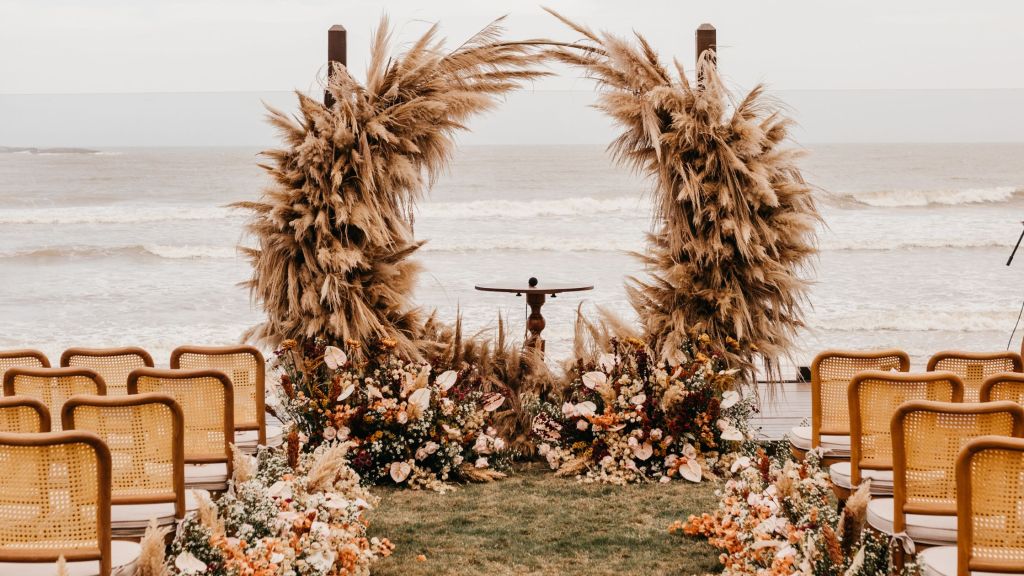
Chapels and gardens and barns, oh my!
There is no shortage of wedding venues, and there’s a style for every aesthetic.
Whether you want a woodland ceremony straight out of Rivendell or a rooftop reception overlooking a vibrant city, there’s a venue for that.
To help you narrow your choices, here are five things to consider when choosing a wedding venue, and 20 questions to guide your search.
1. Budget
If your venue is a high priority for you, you may be willing to spend more money on it relative to other elements of your wedding.
If it’s not, then you probably don’t want to blow your budget on the Biltmore.
Instead, think creatively about how you could repurpose “nontraditional” venues for a wedding. For example, my sister’s friend got married in the bar where she and her fiancé met. She spent very little to rent the space, but she splurged on florals to spruce it up.
For reference, our venue ended up being about 13.5% of our total wedding budget.
2. Capacity
Most venues will be able to accommodate an intimate wedding of 50-75 guests, but you’ll want to confirm this before booking.
And while large venues — say, for 300 guests — would certainly work, you may feel tempted to fill the extra space with something you otherwise wouldn’t need.
If an XL venue is the one, ask if they have partitions available to use. You could rent them, too, but keep this in mind when it comes to your budget.
A smaller venue might be the more economical (and aesthetically pleasing) option.
3. Location
A lot of factors will influence your choice of location, including personal preferences (you like the mountains, for example), sentimental value, travel requirements, anticipated weather, cost, and theme (if you’re planning a wedding with a rustic vibe, you probably won’t choose an industrial building downtown).
Setting
City venues are often within walking (or Ubering) distance from hotels, whereas rural venues typically require coordinated transportation, especially if you’re serving alcohol.
Destination venues, whether in the continental U.S. or abroad, can be harder to plan for, depending on your familiarity with the destination, any local support you have, and how often you’re able to visit during the planning process.
Certain areas are more budget-friendly than others, so it’s worth expanding your search beyond your hometown if you’re not finding many options within your price range.
Environment
Both indoor and outdoor weddings have their appeal. Consider the weather in making your decision. For example, we debated having our ceremony at a charming outdoor theatre tucked into the woods, but summers in Chapel Hill bring 90+ degree days and humidity, which would have made our guests miserable.
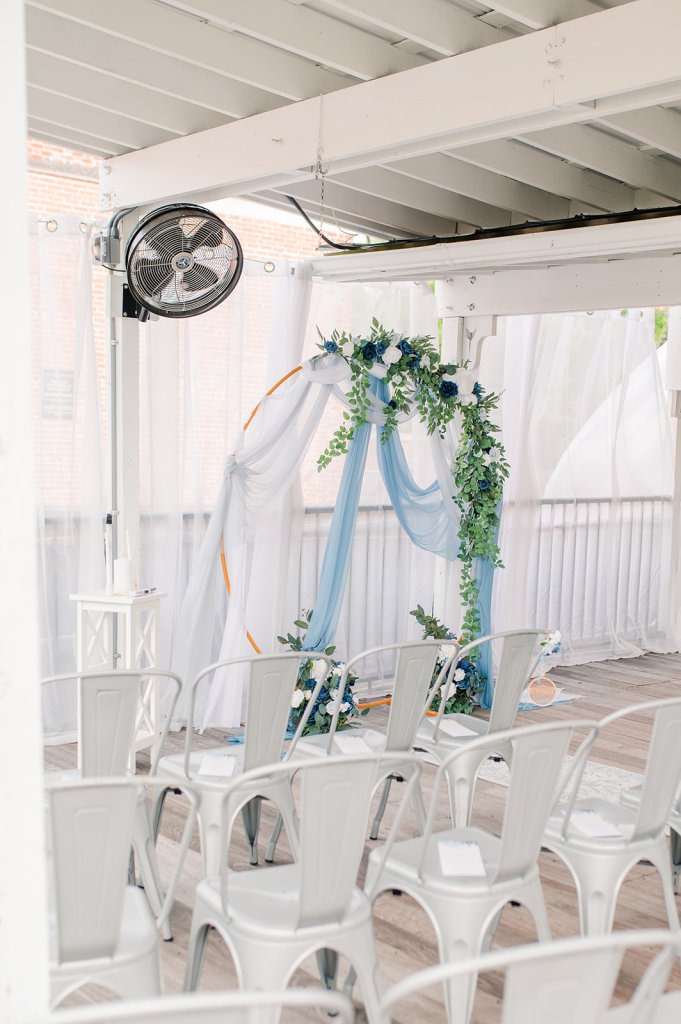
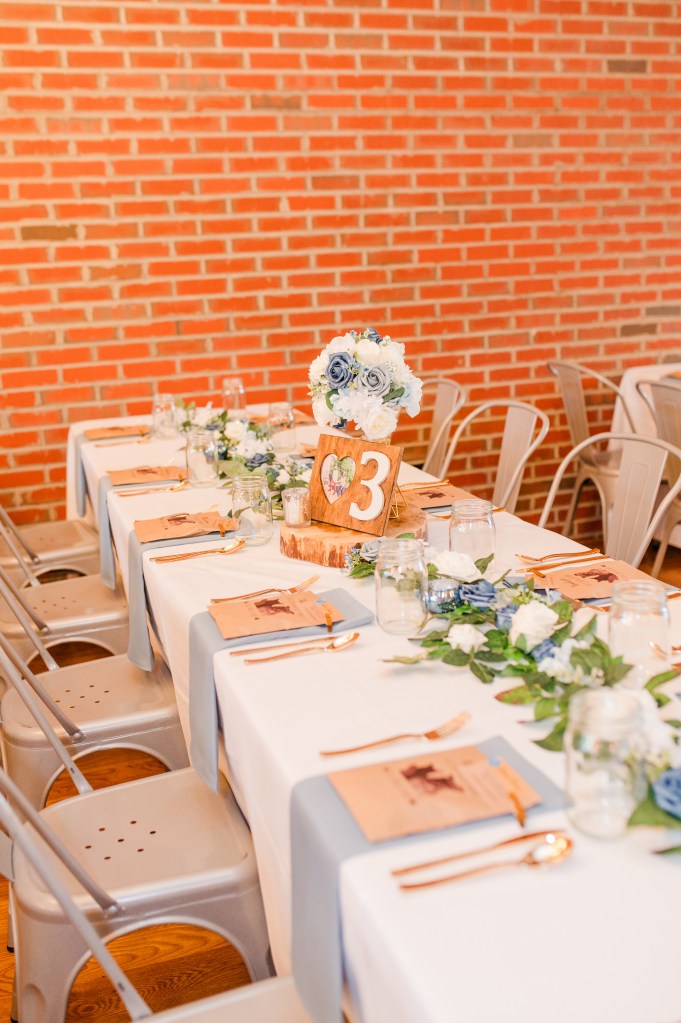
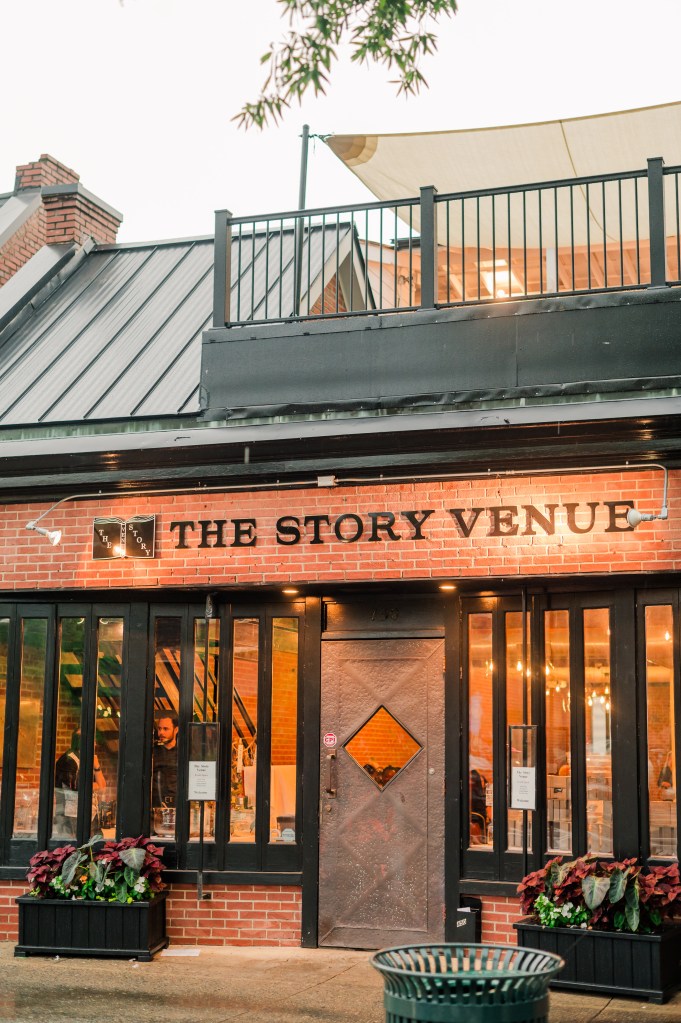
We ended up selecting a three-story venue where we had our ceremony on the covered rooftop deck (out of direct sunlight, with fans!) and our reception in the air-conditioned ballroom on the main floor. This was possible because we didn’t have any guests who required accessibility features, such as elevators.
Keep in mind any additional items you might have to rent if you choose to host an outdoor wedding, including a tent, a dance floor, bathrooms, space heaters, outdoor light fixtures, and extension cords.
One or more
It’s not uncommon to use one venue for your ceremony and another for your reception, especially if you exchange vows in a church or on a beach.
Some couples even opt for a third venue, either for an after-party or a post-wedding brunch. (Godspeed to ya!)
If choosing more than one location, think about their proximity to one another when configuring your wedding day timeline. For example, you won’t want cocktails to begin an hour after the ceremony if the reception venue is only a block away.
4. Accommodations
How a venue accommodates its couples varies widely, as do couples’ needs. Below are a handful of accommodations you may want or need for your wedding weekend.
Getting ready suites
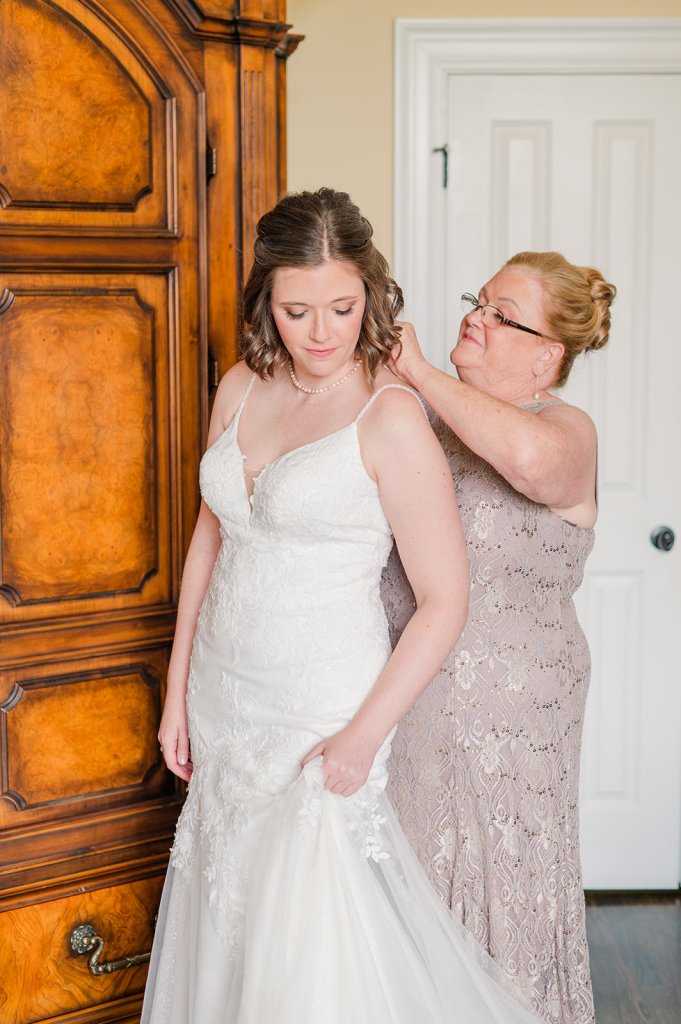
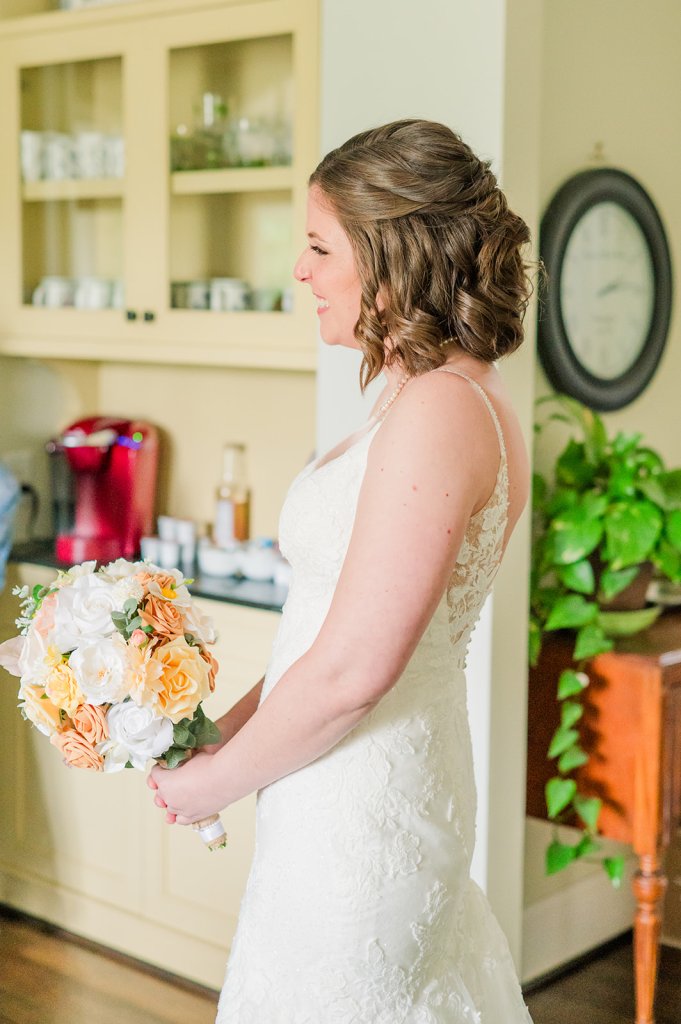
Your wedding day will start early, especially if you hire a hair and make-up team. Some venues offer getting-ready suites for members of the wedding party, others don’t.
If the venue you select doesn’t have a suite, think about alternative places you can get ready. For example, my parents rented an AirBnB for our wedding weekend, and me and my bridesmaids got ready on the main floor, while my husband and his groomsmen got ready in the fully furnished basement, equipped with a movie screening room, pool and foosball tables, and a home gym.
Our hair and make-up team also offered their studio as a space to get ready, so that may be an option for you, too.
Overnight arrangements
Rural venues sometimes offer overnight accommodations, such as in cabins or farmhouses on the property, but not always.
It’s helpful to think through where you and your fiancé will want to sleep both the night before and the night of your wedding. For example, my husband and I chose not to see one another on our wedding day until I walked down the aisle, so the night before our wedding, I stayed at my parents’ AirBnB and my husband stayed in our home.
Flexible hours
Each venue has its own operating hours, so be sure to ask the property managers about what day and time you can set-up, and when you’ll need to be out.
For example, our downtown Chapel Hill wedding had a hard-stop at 11 p.m., whereas my sister-in-law partied into the early morning hours at a barn in rural Montana. In both instances, we were able to set up the day before the wedding and pack up the morning after the wedding.
Rehearsal opportunities
Some venues host multiple weddings every weekend. If you plan to have a rehearsal at your venue, clearly communicate that expectation with the venue manager and confirm which day your rehearsal will take place. Typically, a rehearsal is the day before the wedding, but that might not be an option at a fully-booked venue.
Our venue was relatively new when we booked it, and we were the first clients to host both our ceremony and reception there. I was initially told we could rehearse at the venue the evening before our wedding, but when I confirmed the timeline with our event manager, she said that because we didn’t rent the space for Friday, she’d have to keep it available if other groups wanted to use it. Talk about a STRESSFUL situation!
Coordination & other services
One investment I highly recommend is a day-of coordinator (even better if they help in the weeks leading up to your wedding). If hiring a coordinator isn’t within your budget, ask your venue if they have an in-house coordinator, or at the very least a dedicated point person for your wedding.
That’s another lesson I learned the hard way: one point of contact is best! I assumed the person who coordinated our initial tour, organized our tasting, and communicated with us throughout the planning process would be our primary, and only, point of contact. We found out six weeks before our wedding that we had an assigned “banquet captain,” and that he would be handling everything related to our event. However, the person we’d been communicating with for the past year hadn’t shared all the details we’d discussed, so we basically had to reiterate all of our plans.
Venues that tailor their services to weddings will likely offer other services as well, like tables, chairs, linens, tents, bartenders, etc. as part of (or as an optional add-on to) their fee. This can save you time and money!
However, if your venue doesn’t offer these things, or if they offer some but not all, you’ll have to rent them from another vendor.
5. Catering
Venues fall into one of three categories when it comes to catering: they cater events themselves, they provide a list of preferred caterers for you to choose from, or they allow you to use whichever caterer you’d like.
Some venues offer a combination of the three. For example, our venue charged $3,000 if we also booked their restaurant for catering, or $4,000 if we used another caterer.
If food is a high priority for you, a venue with flexible catering options might be best.
All-inclusive versus A la carte
If you want fewer decisions to make, and fewer vendors to coordinate, you might appreciate an all-inclusive venue. This is the way to go if you’re planning a destination wedding, in my opinion! An all-inclusive venue will handle the catering, the bar, the tables, chairs, and linens, the dinnerware and glassware, and even the decorations. Basically, they’ll have all the day-of, on-site wedding details covered.
If you’d rather pick and choose the vendors you work with based on your preferences and priorities, go for an a la carte venue. They’ll offer a lot of the same things as an all-inclusive venue, but it’ll be your choice as to which services you use, and your cost will vary accordingly.
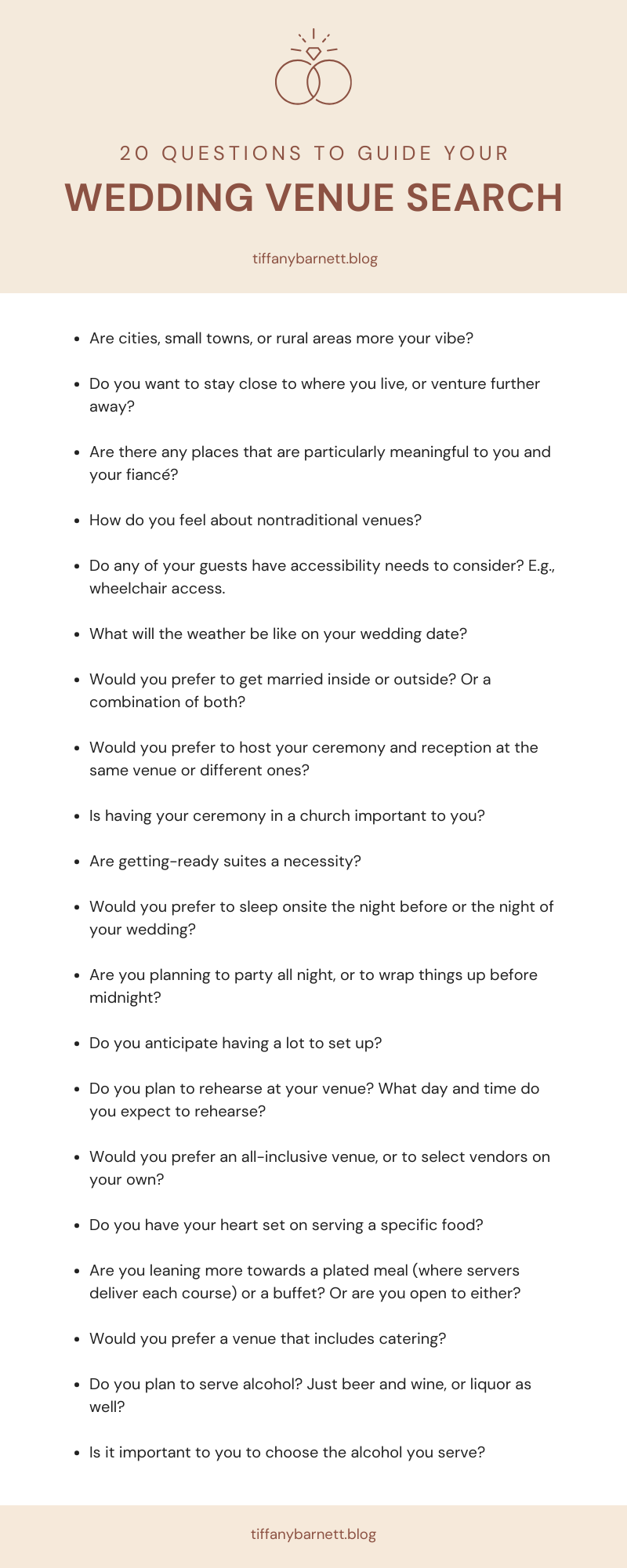
Questions to guide your search
Whew, that was a lot of information! Here are some questions related to the categories mentioned above to help guide your wedding venue search.
Remember what matters most
When searching for and selecting a venue, keep in mind your list of wedding priorities, and where the venue ranks.
You don’t have to tour 10 sites before you make a decision. (We literally toured one, and we booked it. Venue was a low-priority, and the thought of more tours exhausted me.) In hindsight, our venue was relatively new, and it turns out they had some management kinks to work through, so having other options from which to choose would have been wise. Alas, everything worked out!
Don’t be shocked at the sticker price of some venues! There was one that I thought would be perfect until I found out it cost $8K. HARD PASS! Try not to get discouraged. There are reasonably priced venues out there, it just takes some digging to find them.
At the end of the day, your marriage matters most of all, not where you say ‘I do.’ During our wedding-planning process, we actually discovered that multiple family friends eloped back in the day (in the truest sense of the word). Who knew! For the record, their wedding stories were just as romantic and memorable as you’d want yours to be.
Was this post helpful? I’d love your feedback! Please consider leaving a comment and sharing your own wedding plans 🙂
Happy planning!




 Mama's Lullablog
Leave a reply to Tips for choosing a wedding caterer – Tiffany Barnett Cancel reply